
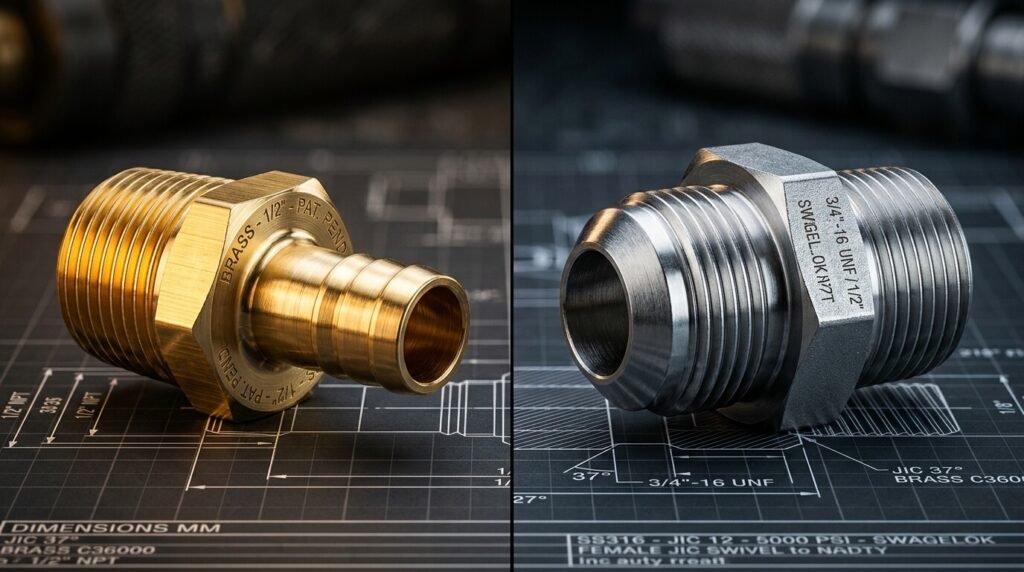
When engineering a fluid control system, deciding between brass vs stainless steel fittings is one of the most critical choices you will make. The decision directly impacts the system’s maximum pressure rating, leak prevention, longevity, and total project cost.
For a quick answer: Brass fittings are highly machinable, cost-effective, and excellent for low-to-medium pressure applications involving water, air, and certain oils. Stainless steel fittings, on the other hand, are exceptionally strong, offering superior high-pressure handling and unmatched corrosion resistance for harsh marine, chemical, and heavy-duty hydraulic environments.
As a leading manufacturer of hydraulic adapters and fluid connectors, Kaitu Fitting understands that over-specifying wastes money, while under-specifying leads to catastrophic system failures. This comprehensive guide will break down the differences in strength, corrosion resistance, and exact use cases to help you choose the right material for your next project.
1. Material Composition and Fundamental Properties
To understand how these fittings behave under stress, we must look at their core metallurgy.
The Anatomy of Brass Fittings
Brass is an alloy primarily composed of copper and zinc. It is a relatively soft metal compared to steel, which gives it a massive advantage in manufacturing: it is highly machinable. This means threads on brass hydraulic fittings can be cut with extreme precision, providing a tight, smooth seal. It is naturally resistant to rust (since it contains no iron) and handles water-based fluids exceptionally well.
The Anatomy of Stainless Steel Fittings (304 & 316)
Stainless steel is an iron-based alloy containing high levels of chromium (at least 10.5%) and nickel. The chromium forms a passive oxide layer on the surface that acts as an invisible shield against rust. In the hydraulic industry, 304 and 316 are the standard grades, with 316 containing added molybdenum for even greater resistance to chloride (salt) pitting. Stainless steel is incredibly tough, rigid, and built to withstand extreme mechanical stress.
2. Strength and Pressure Ratings in Hydraulic Systems
In the fluid power industry, pressure is everything. The physical strength of the material dictates where the fitting can be safely installed.
When to Use Brass for Pressure
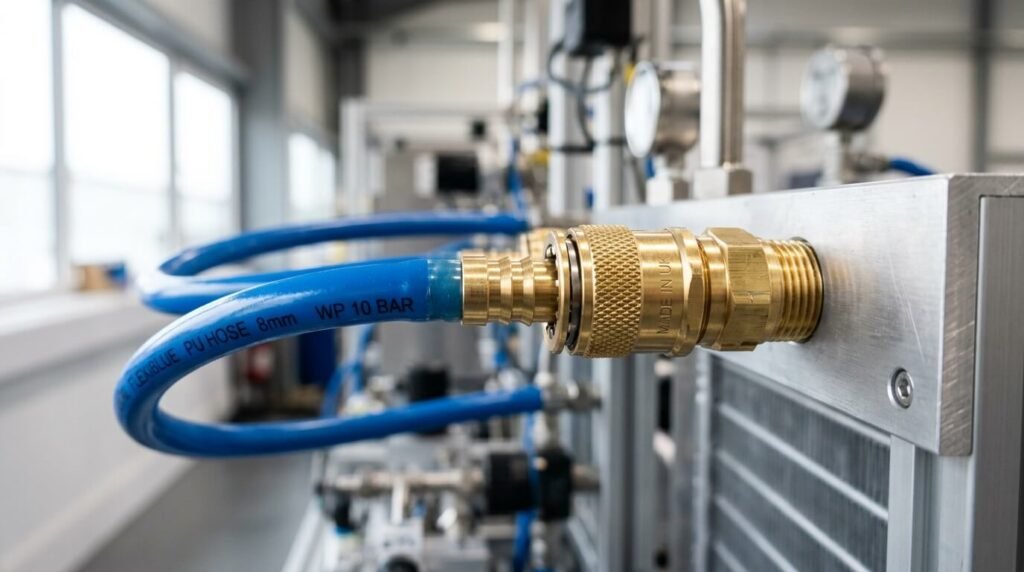
Because brass is a softer alloy, it has lower tensile strength. Standard brass fittings are typically rated for low to medium pressure systems (often up to 1,000 to 3,000 PSI, depending on the specific design and wall thickness).
Ideal Use Cases: Brass excels in pneumatic (air) lines, cooling water loops, low-pressure lubrication systems, and fuel lines. For instance, brass push-on fittings are incredibly popular because they allow for rapid, tool-free assembly in low-pressure factory automation environments.
When Stainless Steel is Mandatory
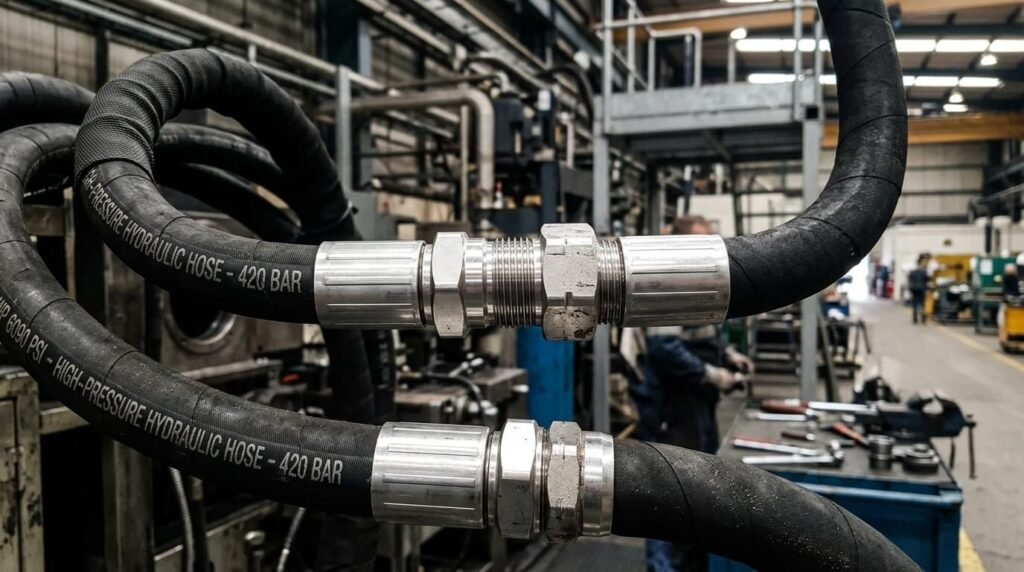
When you are dealing with heavy machinery, excavators, or offshore drilling equipment, system pressures frequently exceed 4,000, 6,000, or even 10,000 PSI. Under these extreme dynamic loads and pressure spikes, brass will deform, leading to thread failure and high-velocity leaks.
Stainless steel hydraulic adapters maintain their structural integrity under immense torque and hydrostatic pressure. If you are using high-pressure thread profiles like ORFS (O-Ring Face Seal) or SAE Flanges in heavy-duty machinery, stainless steel (or carbon steel for non-corrosive indoor use) is strictly required.
3. Corrosion Resistance and Environmental Durability
Both materials resist corrosion, but they do so in entirely different ways and against different chemicals.
Corrosion Resistance of Brass
Brass will never rust because it lacks iron. It performs admirably in hot and cold water systems. However, brass is highly vulnerable to dezincification—a process where aggressive chemicals (like strong acids, alkalis, or highly chlorinated water) eat away the zinc, leaving behind a porous, fragile copper shell. Brass should also be kept away from high concentrations of ammonia.
Corrosion Resistance of Stainless Steel
Stainless steel is the undisputed king of harsh environments. It shrugs off a vast array of chemicals, solvents, and environmental hazards.
- Chemical Processing: Stainless steel handles acids and caustic washdowns without degrading.
- Marine and Offshore: Type 316 stainless steel is essential for offshore hydraulic lines and ship decks, as it resists the aggressive pitting caused by saltwater spray.
4. Temperature Tolerance
Hydraulic systems generate heat, and the ambient environment can fluctuate wildly.
- Brass: Loses its tensile strength relatively quickly as temperatures rise. It is generally safe for continuous operation up to about 400°F (204°C). Extreme cold can also make some brass alloys brittle.
- Stainless Steel: Retains its high strength even at elevated temperatures up to 1,000°F (538°C) and performs exceptionally well in cryogenic (extreme cold) conditions without losing toughness.
5. Thread Galling: A Unique Stainless Steel Challenge
One distinct advantage of brass is its “lubricity.” When tightening a brass fitting, the metal smoothly glides into place.
Stainless steel, however, is prone to galling (cold welding). Under high friction during tightening, the protective oxide layers can scrape off, causing the bare metals to fuse together. At Kaitu Fitting, our stainless steel JIC adapters and NPT fittings are precision-machined to exact tolerances to minimize this risk, but we always recommend using a high-quality anti-seize lubricant or Teflon tape (for NPT threads) during assembly.
6. At-a-Glance Comparison: Brass vs Stainless Steel Fittings
| Feature | Brass Fittings | Stainless Steel Fittings (304/316) |
|---|---|---|
| Working Pressure | Low to Medium (Up to ~3,000 PSI) | Extreme High (Up to 10,000+ PSI) |
| Corrosion Resistance | Good for water/air; vulnerable to ammonia and strong acids. | Excellent against harsh chemicals, saltwater (316), and heavy industrial use. |
| Temperature Tolerance | Moderate (Up to ~400°F) | Very High (Up to ~1,000°F) and great for cryogenic use. |
| Cost | More economical | Premium investment |
| Best Hydraulic Applications | Push-on fittings, pneumatics, cooling loops, return lines. | High-pressure main lines, marine hydraulics, chemical processing. |
Frequently Asked Questions (FAQ)
Can I connect a brass fitting to a stainless steel fitting?
While it is physically possible if the thread standards (like NPT or BSP) match, it is generally not recommended in wet or highly conductive environments. Connecting these dissimilar metals can cause galvanic corrosion, where the less noble metal (brass) will corrode at an accelerated rate when exposed to an electrolyte like saltwater. For indoor, dry air systems, the risk is lower, but matching materials is always the best engineering practice.
Are brass fittings suitable for hydraulic oil?
Yes, brass is chemically compatible with standard petroleum-based hydraulic fluids. However, the limitation is pressure, not chemical compatibility. Brass is perfectly fine for low-pressure hydraulic return lines or cooling circuits, but should not be used in high-pressure supply lines where stainless steel or carbon steel is required.
Why are stainless steel hydraulic fittings more expensive than brass?
The cost difference comes down to raw material prices and machinability. Stainless steel contains expensive alloying elements like chromium, nickel, and molybdenum. Additionally, because stainless steel is incredibly hard, it requires more expensive tooling, slower machining speeds, and more energy to manufacture compared to the softer, easy-to-machine brass.
Conclusion: Making the Right Choice for Your System
The debate of brass vs stainless steel fittings shouldn’t be about which material is “better,” but rather which is correct for your specific operational parameters.
If you are building a low-pressure pneumatic system, a water cooling loop, or utilizing push-on hoses, brass fittings provide an unbeatable combination of easy installation, excellent sealing, and cost-effectiveness. However, if your fluid system involves high-pressure hydraulic pumps, aggressive chemical exposure, or offshore marine environments, investing in stainless steel hydraulic adapters is an absolute necessity to prevent dangerous leaks and costly downtime.
At Kaitu Fitting, we manufacture a massive inventory of over 1,000 standard specifications in both premium stainless steel and high-quality brass. Contact our engineering team today to find the perfect fluid connection solution tailored specifically to your industry’s demands.