
Where to buy stainless steel pipe fittings is a critical question for procurement managers and engineers who frequently face a “Goldilocks” dilemma when sourcing industrial components. On one hand, small-scale local vendors may offer personalized service but often lack the rigorous quality control and volume capacity required for major projects. On the other hand, massive global distributors provide vast catalogs but often fail to deliver the granular technical support or customization needed for complex hydraulic systems. This mismatch frequently leads to one outcome: project delays.
Choosing an unverified source for your stainless steel 304 pipe fittings or high-pressure adapters does more than just strain your quarterly budget. A single sub-standard fitting—perhaps one with a microscopic casting flaw or off-spec thread taper—can trigger systemic leaks, catastrophic equipment downtime, and severe safety hazards in high-pressure environments. When the integrity of an entire refinery, food processing line, or hydraulic system rests on a $15 component, “cheap” becomes very expensive.
This guide details the essential criteria for identifying a reliable B2B supplier. Whether you are looking for 304 stainless steel fittings for general corrosion resistance or 316 SS pipe fittings for marine and chemical applications, these insights will help you secure high-performance components that meet strict international standards.
II. Tiered Sourcing: Identifying the Right Supplier Category
The global supply chain for stainless steel components is vast. To determine where to buy stainless steel pipe fittings, you must first identify which tier of supplier aligns with your project’s technical and volume requirements.
Direct Manufacturers vs. Master Distributors
Understanding the difference between these two entities can save you thousands in both unit costs and engineering headaches.
- Benefits of Factory-Direct Sourcing: By working directly with us or other manufacturers, you eliminate the “middleman markup.” This allows for lower margins and, more importantly, technical transparency. When you have a question about the heat treatment of a batch or need a custom modification to a 37-degree flare fitting, you are speaking to the source, not a salesperson reading from a catalog.
- When to Use Local Distributors: Distributors are valuable when you need five pieces of stainless steel 304 pipe fittings by tomorrow morning. They serve the immediate, low-volume “break-fix” market. However, for recurring production or large-scale infrastructure, they lack the scalability and customization of a factory.
Specialized Industrial B2B Platforms
Not all marketplaces are created equal. General consumer platforms often list “stainless steel” items that lack industrial-grade certification. To find reputable sources, focus on niche B2B platforms that require vendors to upload ISO 9001 certifications and verified Mill Test Reports (MTRs).
The Importance of Geographical Clusters
Industry expertise often clusters in specific regions. For example, Hebei, China, has emerged as a global hub for stainless steel hydraulic components. Sourcing from an established cluster ensures that the manufacturer has access to a specialized workforce, high-tier raw material suppliers, and sophisticated logistics infrastructure designed specifically for heavy industrial exports.
III. Verification Excellence: Beyond the Price Tag
In the B2B sector, price is a secondary metric to traceability. A low-cost fitting that fails under pressure costs ten times its value in downtime.
Material Certification & Traceability
The chemical composition of your fittings determines their lifespan. You cannot visually distinguish between 304 stainless steel fittings and 316 stainless steel pipe fittings, yet their performance in chloride-rich environments is vastly different.
- The Non-Negotiable MTR: Every shipment must be accompanied by a Mill Test Report. This document verifies the exact levels of Chromium, Nickel, and Molybdenum.
- Standards Compliance: Ensure your supplier adheres to ASTM (American Society for Testing and Materials) for material quality and ASME (American Society of Mechanical Engineers) for dimensional accuracy.
Comparison: Grade 304 vs. 316 Stainless Steel
| Feature | 304 Stainless Steel | 316 Stainless Steel |
| Primary Alloy | 18% Cr, 8% Ni | 16% Cr, 10% Ni, 2% Mo |
| Corrosion Resistance | High (General use) | Superior (Marine/Chemical) |
| Pitting Resistance | Moderate | High (due to Molybdenum) |
| Common Application | Food/Beverage, Indoor piping | Oil & Gas, Coastal, Medical |
Quality Control (QC) Infrastructure
A reliable supplier doesn’t just “check” quality; they build it into the process. Evaluate a supplier based on their investment in:
- SPECTRO Analysis: Handheld or laboratory spectrometers used to verify the alloy grade before machining begins.
- Hydrostatic Testing: Subjecting a percentage of the production run to pressures exceeding their rated limit to ensure safety.
- Thread Gauging: Constant monitoring with calibrated Go/No-Go gauges to ensure NPT, BSPT, or JIC threads are within tolerance.
[Insert Data/Source: Placeholder for a case study showing how SPECTRO analysis caught a batch of “mismarked” raw material, saving a client from a 100% failure rate.]
IV. Evaluating Supply Chain Stability and Lead Times
In high-stakes industries, “time is money” is a literal truth. When deciding where to buy stainless steel pipe fittings, you are buying the supplier’s logistics capability as much as the steel itself.
Inventory Depth
Ask your supplier to clarify if their stock is “on-floor” or “virtual.” A manufacturer with significant raw material and finished goods inventory can mitigate the risks of global steel price spikes. For critical standards like NPT or 316 SS pipe fittings, verify their ability to fulfill immediate “hot” orders versus standard production lead times.
Logistics and Export Expertise
International shipping is a minefield of Incoterms and customs documentation. A supplier with a dedicated export department will understand:
- Proper Packaging: Using vapor-corrosion inhibitor (VCI) bags and reinforced wooden crates to prevent thread damage or rust during sea transit.
- Customs Compliance: Providing accurate HS codes to prevent port delays.
Scalability for Long-Term Contracts
For ongoing projects, look for “Blanket Order” capabilities. This allows you to lock in a price for a year’s worth of stainless steel 304 pipe fittings, with the factory releasing stock in monthly increments. This protects your budget from the volatility of the nickel market.
V. Common Mistakes to Avoid in Fitting Procurement
1. Prioritizing Unit Cost Over Total Cost of Ownership (TCO)
“Cheap” fittings often suffer from thread galling. This occurs when poor surface finish causes the threads to cold-weld together during installation. If a fitting galls, you have to cut it out and replace it—doubling your labor costs.
2. Overlooking Thread Compatibility
A common error is assuming NPT (National Pipe Tapered) and BSPT (British Standard Pipe Tapered) are interchangeable. They are not. Their thread angles differ (60° vs. 55°), and mixing them creates a weak point that will eventually leak under vibration or pressure.
3. Neglecting Surface Finish and Precision
Inspect the chamfers and internal bores. Burrs or inconsistent surfaces are indicators of dull tooling or rushed manufacturing. In hydraulic systems, these burrs can break loose and destroy sensitive valves or pumps downstream.
[Insert Data/Source: Placeholder for a chart showing the correlation between surface roughness (Ra) and leak-free seal longevity.]
4. Skipping the Sampling Phase
Never commit to a 5,000-piece order without a physical sample. Testing a sample allows your engineers to verify “hand-tight” engagement and material hardness in your specific application.
VI. Why Partner With Us?
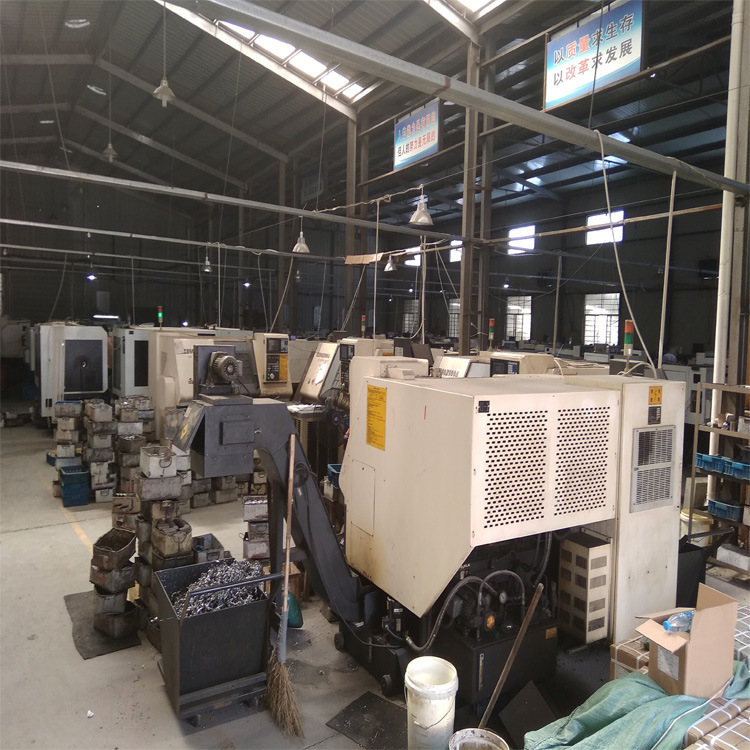
We are a factory from Hebei, China which specializes in all kinds of stainless steel hydraulic hose fittings, connectors and adaptors. With our competitive price, stable output, low MOQ, prompt delivery, we’ve won a great reputation among our clients from all over the world.
We bridge the gap between the “too small” local shop and the “too large” impersonal distributor. Our production lines are optimized for high-precision 316 stainless steel pipe fittings and 304 stainless steel fittings, ensuring every piece that leaves our floor is backed by full traceability and rigorous testing. We don’t just sell fittings; we provide the peace of mind that your fluid systems are secure.
Contact Us for a Quote
Sourcing the right components is a strategic balance of material integrity, manufacturer transparency, and supply chain reliability.
Ready to secure your high-pressure systems? Tell us your requirements (grade, thread type, and volume) and get a comprehensive quote within 24 hours.