Tech Specs & Standards

This column is your definitive technical reference library. We dive deep into the engineering fundamentals of stainless steel fittings, decoding critical specifications such as pressure-temperature ratings, material composition (304, 316/L, Duplex), and dimensional tolerances. Beyond the numbers, we provide clear, authoritative explanations of the global standards that govern design, testing, and safety—including ISO, ASME, SAE, DIN, and JIS. Whether you’re selecting a fitting for a new design or verifying compliance, this column transforms complex technical documents into accessible, actionable knowledge.

Understanding Thread Pitch: Metric vs BSPP vs UN/UNF Comparison

Understanding Thread Pitch: Metric vs BSPP vs UN/UNF Comparison

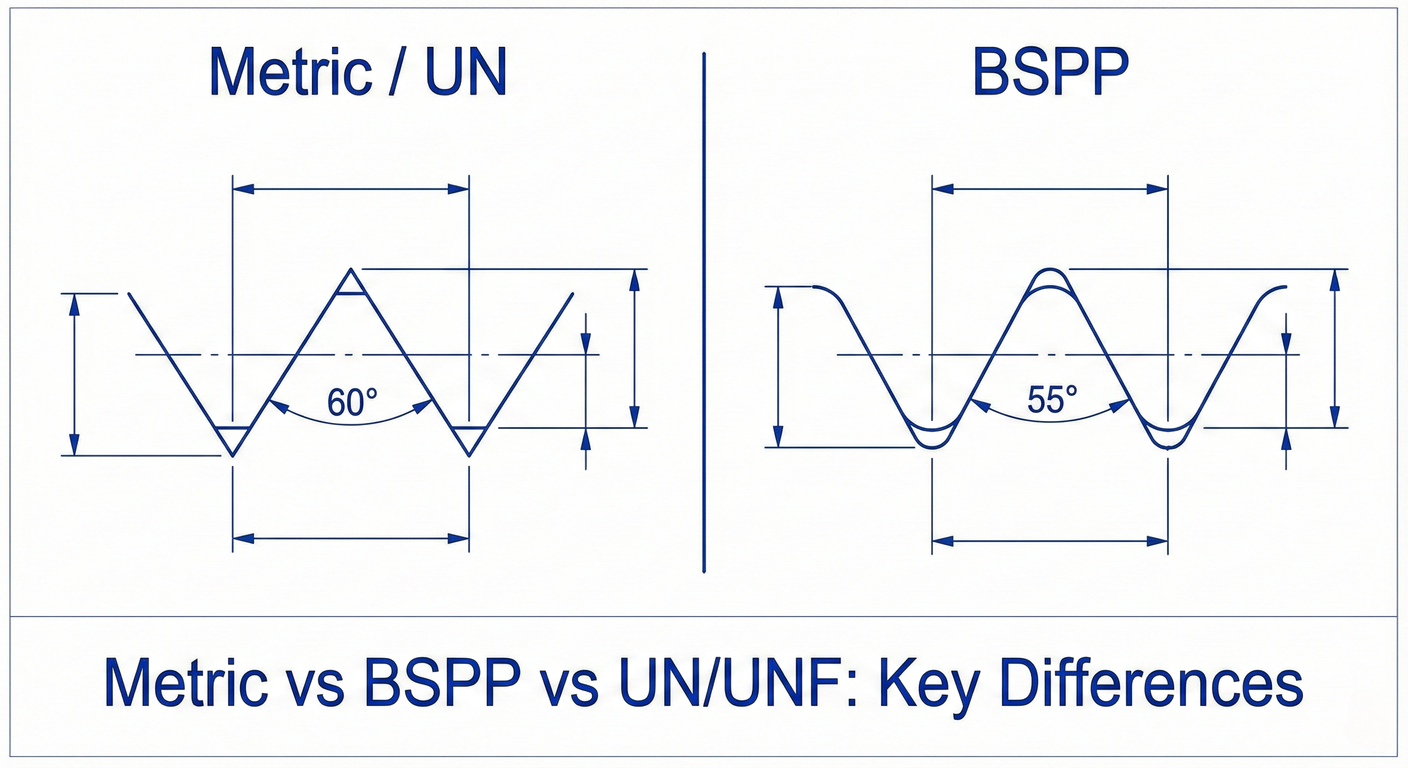
TL;DR: Thread pitch defines the specific distance between threads, but it is expressed differently across standards. Metric threads measure the distance in millimeters, whereas BSPP and UN/UNF systems count Threads Per Inch (TPI). Although some diameters appear similar, these thread systems utilize different flank angles (55° vs. 60°) and are not directly interchangeable. Identifying the correct pitch is mandatory […]

Understanding Thread Pitch: Metric vs BSPP vs UN/UNF Comparison Read More »
Understanding Thread Pitch: Metric vs BSPP vs UN/UNF Comparison

DIN 2353 L-Series vs. S-Series Dimensions: Key Differences and Selection Guide

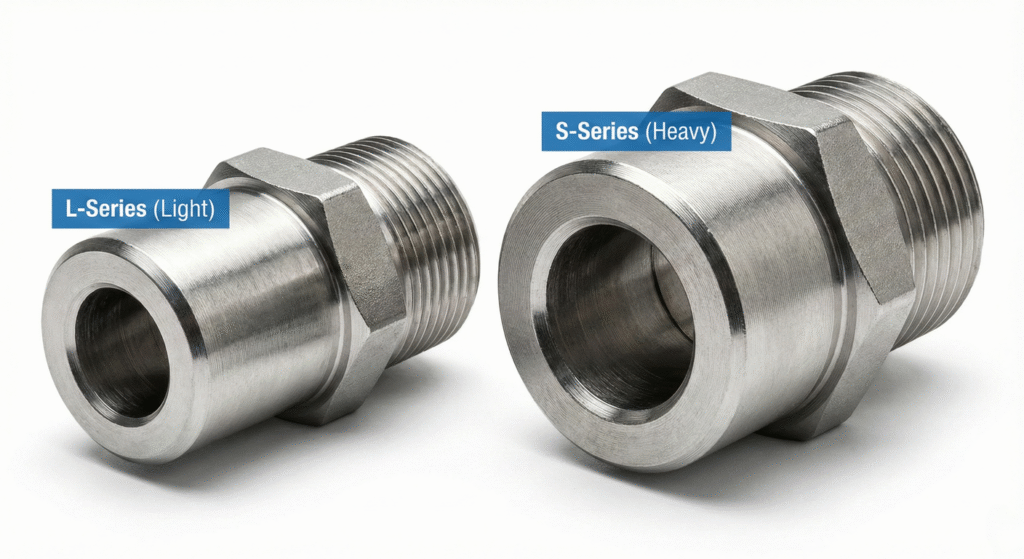
TL;DR: DIN 2353 compression fittings are divided into L-Series (Light) and S-Series (Heavy). While they may share the same Tube Outer Diameter (OD), they differ significantly in wall thickness, thread size, and pressure rating. They are not interchangeable. L-Series is for medium-pressure lines, while S-Series handles high-pressure, high-vibration, and water-hammer conditions. Understanding DIN 2353 Compression Fittings What Is DIN 2353?

DIN 2353 L-Series vs. S-Series Dimensions: Key Differences and Selection Guide Read More »

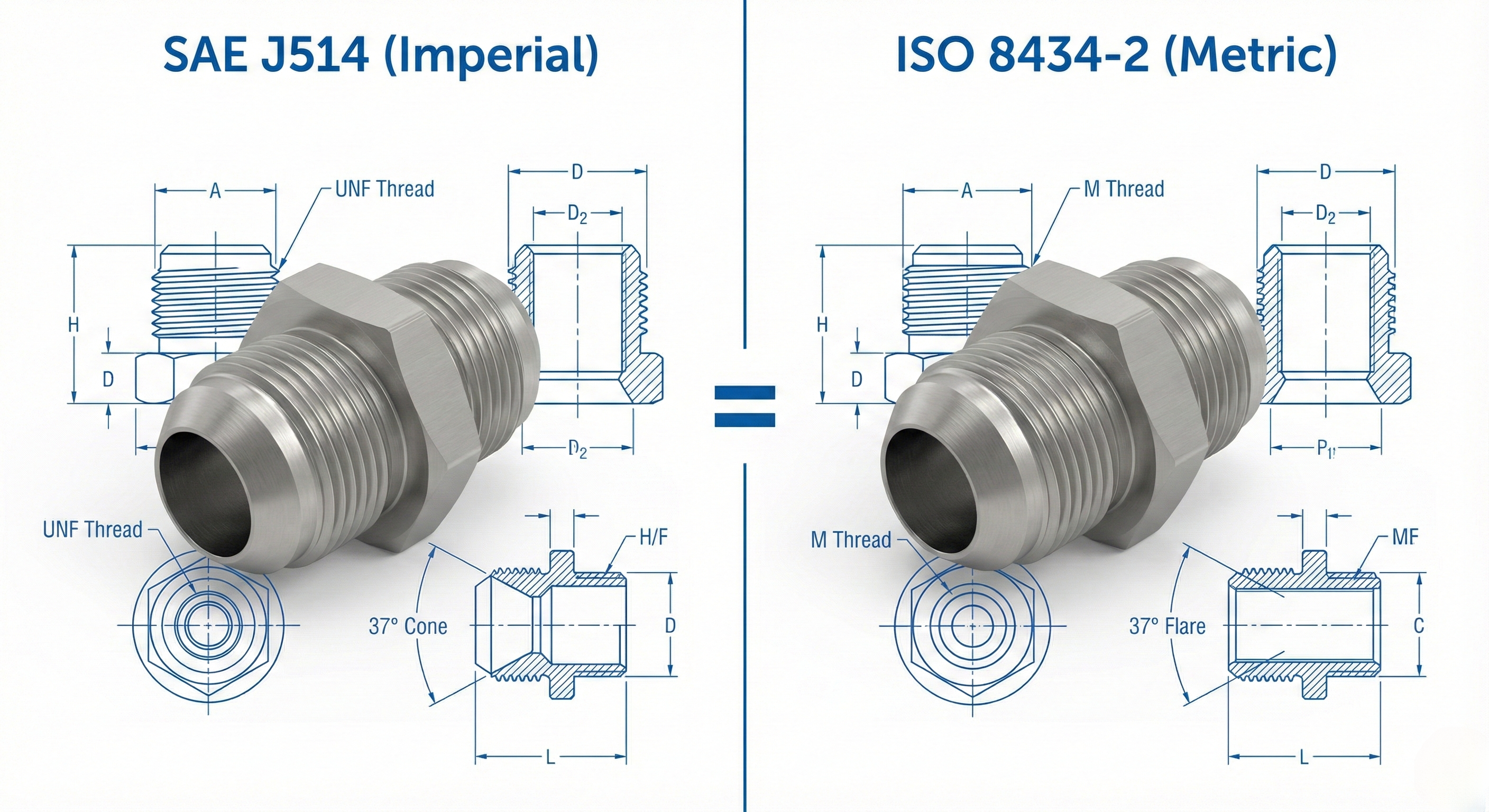
SAE J514 vs. ISO 8434-2: Are JIC 37° Flare Standards the Same?

SAE J514 vs. ISO 8434-2: Are JIC 37° Flare Standards the Same?

TL;DR: SAE J514 and ISO 8434-2 define the same JIC 37° flare fitting system. They are dimensionally and functionally interchangeable. The only difference lies in the documentation format and unit expression (imperial inch vs. metric mm). For global procurement, specifying either standard ensures you receive the exact same compatible component. Are SAE J514 and ISO 8434-2 the Same Standard? Short Answer: Yes. Both

SAE J514 vs. ISO 8434-2: Are JIC 37° Flare Standards the Same? Read More »

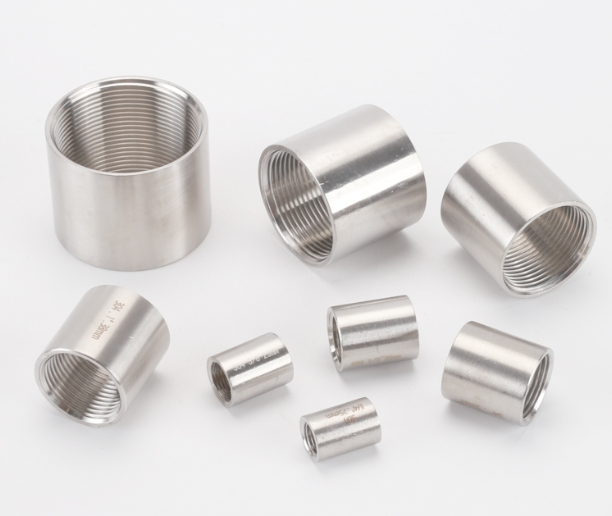
Understanding Stainless Pipe Couplings and Their Standards

Understanding Stainless Pipe Couplings and Their Standards

Stainless pipe couplings connect pipes tightly. This helps stop leaks in many places. These couplings use materials like SS304 and SS316. These materials protect well against rust and corrosion. The table below shows how they are different: Material Composition Corrosion Resistance Properties SS304 18% Chromium, 8% Nickel Very good at stopping rust and oxidation in easy

Understanding Stainless Pipe Couplings and Their Standards Read More »

Stainless steel flanged fittings: Which type fits best?

Stainless steel flanged fittings: Which type fits best?

For most uses, 316/L stainless steel flanged fittings, specifically weld neck types, are very strong and resist rust well. They work effectively in tough environments with water or chemicals. The best stainless steel flanged fittings depend on your system’s pressure, temperature, and the fluid you use. How the fitting is made, whether by forging or casting,

Stainless steel flanged fittings: Which type fits best? Read More »

What Are 316 Stainless Steel Fittings and Where Are They Used

What Are 316 Stainless Steel Fittings and Where Are They Used

You use 316 ss fittings to join pipes and tubes in tough places. These fittings are special because they do not rust. They last a long time and work well in hard situations. Many industries use them for safety and good results. For example: Industry Description Oil and Gas Precision fittings help keep moving resources safe. Chemical

What Are 316 Stainless Steel Fittings and Where Are They Used Read More »

What are Stainless Steel Barbed Fittings and How Do They Work

What are Stainless Steel Barbed Fittings and How Do They Work

Stainless steel barbed fittings let you join flexible tubing safely. The barbed end holds the hose tight, so leaks are rare. You get a tough and lasting connection because stainless steel, like that used in Kaitu fittings, does not rust or break easily. Stainless Steel Barbed Fittings Features You use stainless steel barbed fittings when

What are Stainless Steel Barbed Fittings and How Do They Work Read More »

Understanding Dash Size Conversion for Accurate Hydraulic Fitting Orders

Hydraulic Fitting Dash Sizes Conversion Guide: Standards and Practical Methods

Dash Size Conversion helps you pick the right hydraulic fittings. Dash size tells you the inside diameter of hoses or fittings. This size affects how fluids move in your equipment. If you pick the wrong size, you can have many problems: You can stop these problems by knowing dash size and choosing correctly. Dash Size

Hydraulic Fitting Dash Sizes Conversion Guide: Standards and Practical Methods Read More »

A pile of stainless steel hydraulic fittings

How to Identify Hydraulic Fitting Threads? Everything You Need to Know

To identify hydraulic threads, you need to examine the thread type, size, and sealing method. Tools like thread gauges are essential to measure the spacing between threads accurately. Calipers help you determine the thread width precisely. Using reference charts allows you to match your measurements to the correct standard. Many repair shops have prevented 25%

How to Identify Hydraulic Fitting Threads? Everything You Need to Know Read More »

Shopping Cart