
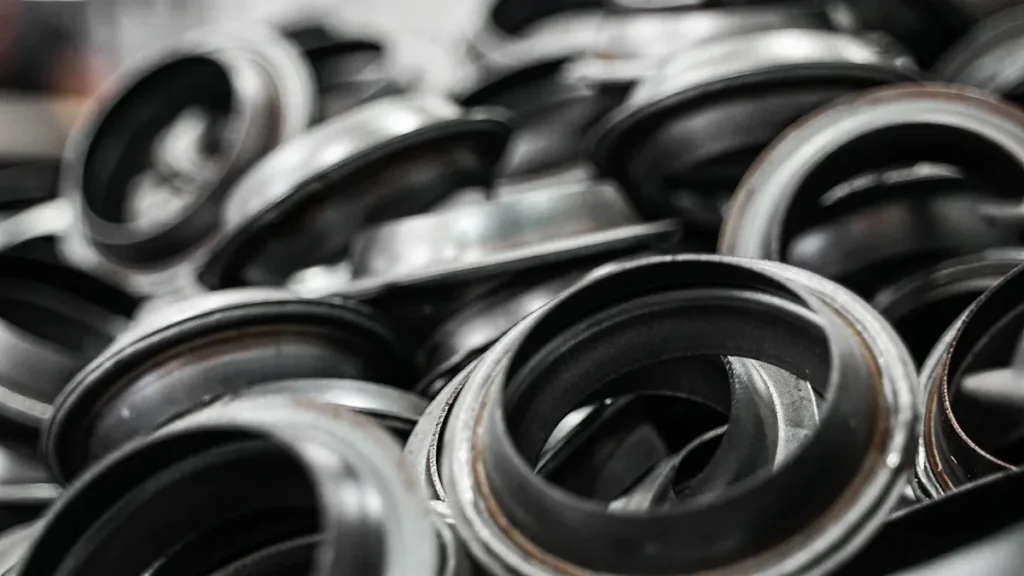
You use 316 ss fittings to join pipes and tubes in tough places. These fittings are special because they do not rust. They last a long time and work well in hard situations. Many industries use them for safety and good results. For example:
| Industry | Description |
|---|---|
| Oil and Gas | Precision fittings help keep moving resources safe. |
| Chemical Processing | High-performance fittings can handle strong, harmful chemicals. |
| Food and Beverage | Stainless parts help keep things clean during production. |
| Pharmaceuticals | Fittings help keep things safe and follow strict rules. |
| Water Treatment | They help make sure water systems are clean and new. |
You can see why it is important to know where and why to use these fittings. Each industry needs their special features for important jobs.
316 SS Fittings Overview
What Are 316 SS Fittings
316 ss fittings help connect pipes and tubes in many places. These fittings have different shapes and sizes. Each kind helps make strong and tight connections. Here are some types you might see:
| Type of Fitting | Description | Applications |
|---|---|---|
| Threaded fittings | Join pipes with threaded ends | Water, fuel, and oil in low-pressure systems |
| Socket welded fittings | Insert into a socket and weld in place | High-pressure systems |
| Butt-welded fittings | Weld directly to the pipe ends | Permanent piping systems |
You can find bushings, caps, couplings, elbows, tees, and unions made from 316 stainless steel. These fittings from a reliable supplier like Kaitu Fitting are good when you need strong and safe parts.
Key Properties
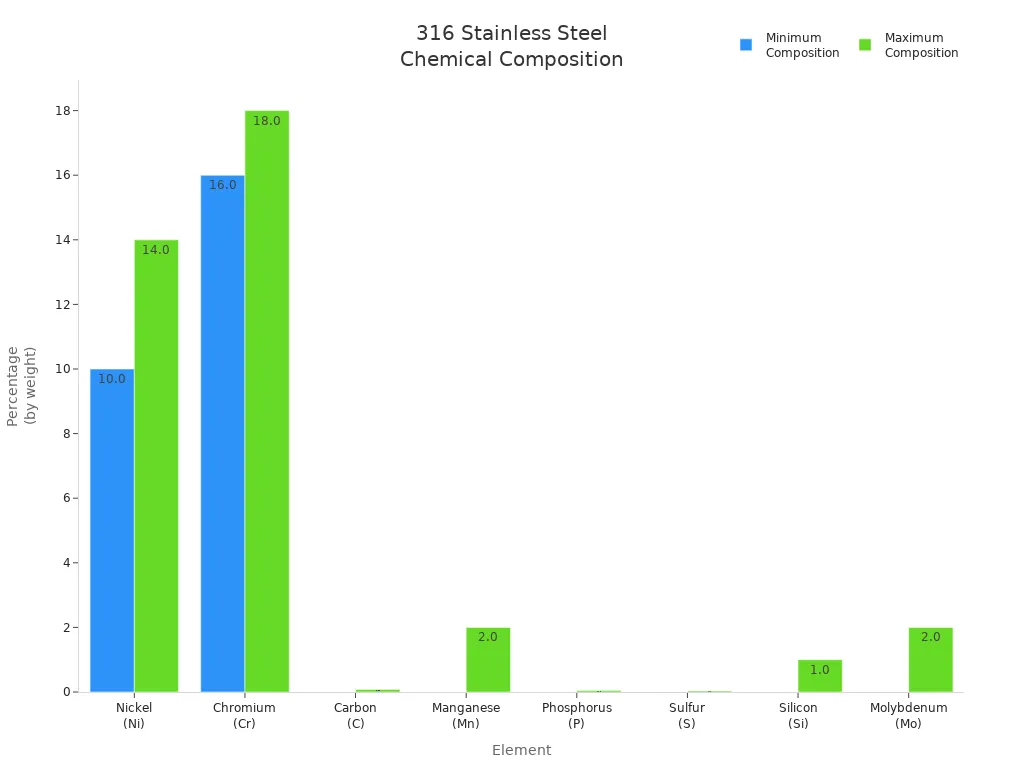
316 ss fittings are special because of their material. The main parts in 316 stainless steel make it strong and stop rust. Here is a table that shows what is inside this alloy:
| Element | Minimum | Maximum |
|---|---|---|
| Carbon (C) | N/A | 0.08 |
| Manganese (Mn) | N/A | 2.00 |
| Phosphorus (P) | N/A | 0.045 |
| Sulfur (S) | N/A | 0.030 |
| Silicon (Si) | N/A | 1.00 |
| Nickel (Ni) | 10.0 | 14.0 |
| Chromium (Cr) | 16.0 | 18.0 |
| Molybdenum (Mo) | N/A | 2.00 |
These fittings do not rust easily. Molybdenum in 316 stainless steel helps stop rust, even in salty water. They are strong and last a long time. You do not need to fix them often, so you save money and time. You can use them where you need clean and safe parts, like in food or medicine factories.
Tip: 316 ss fittings last longer and need fewer replacements, which lowers your long-term costs.
316 vs Other Grades
You may wonder how 316 stainless steel is different from other grades like 304 or 317. The big difference is the extra molybdenum in 316. This makes 316 better at stopping rust, especially in tough places like the ocean.
| Grade | Molybdenum Content | Mechanical Properties Impact |
|---|---|---|
| 304 | N/A | Lower corrosion resistance |
| 316 | 2-3% | Improved corrosion resistance |
| 317 | >3% | Highest corrosion resistance |
316 stainless steel has more nickel and less chromium than 304. This change makes it stronger and gives better protection. For example, in salty water, 316 does not get pitted or crevice corrosion as much as 304. Experts say to use 316 for things like anchors and railings because it lasts longer in wet, salty air.
| Stainless Steel Type | Tensile Strength | Hardness |
|---|---|---|
| 304 | Moderate | Moderate |
| 316 | High | High |
Pick 316 ss fittings when you need strong, safe, and rust-free parts. They work best in hard places, like chemical plants, marine areas, and food factories.
Benefits
Corrosion Resistance
You need fittings that work in hard places. 316 ss fittings do not rust or corrode easily. They stay strong, even with chemicals or saltwater. Molybdenum in the alloy helps stop damage. It protects against pitting and crevice corrosion. Other metals can get damaged, but these fittings last longer.
No stainless steel can fully stop Chloride Stress Corrosion Cracking (CSCC). Tests show 316 stainless steel fittings work very well with lots of chloride.
Here is how 316 stainless steel does in lab tests compared to other alloys:
| Test Environment | Alloy 316 | Alloy 316L | Alloy 317L |
|---|---|---|---|
| 42% Magnesium Chloride, Boiling | Cracked, 4-24h | Cracked, 21-45h | Cracked, 72h |
| 33% Lithium Chloride, Boiling | Cracked, 48-569h | Cracked, 21-333h | Cracked, 22-72h |
| 26% Sodium Chloride, Boiling | Cracked, 530-940h | No Cracking, 1002h | Cracked, 1000h |
| Seacoast Exposure, Ambient | No Cracking | No Cracking | No Cracking |
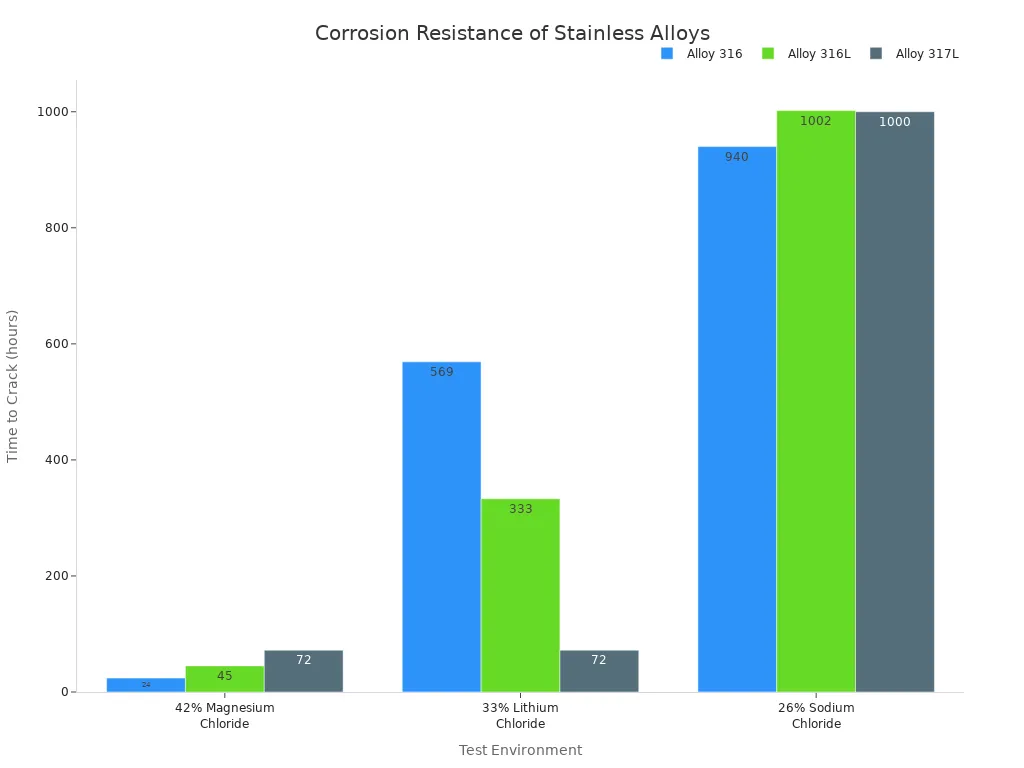
316 ss fittings last longer in salty or chemical places. The Pitting Resistance Equivalent Number (PREN) for 316 is 24.2. This is much higher than 304 stainless steel’s 19.0. You get better protection from rust.
Durability
You want fittings that last a long time. 316 ss fittings are strong and tough. They work well in hot, cold, or high-pressure places. Here are some important features:
| Feature | Specification |
|---|---|
| Temperature Range | -328°F to 1200°F |
| Maximum Pressure | Up to 6,000 psi |
| Resistance to Over-Torque | Withstands 200% above rated value |
| Reusability | Unlimited |
- Chemical plants use these fittings for 40-80 years.
- They work even with high heat and acids.
- You can use them again and again.
- This saves money and cuts down on waste.
Hygiene
If you work with food, drinks, or medicine, you need clean fittings. High-quality 316 ss fittings from Kaitu Fitting have smooth surfaces. Bacteria cannot grow easily on them. Cleaning is simple, so you follow safety rules.
| Certification/Standard | Description |
|---|---|
| FDA | Meets rules for food contact surfaces, with at least 16% chromium |
| NSF | Certifies hygienic design for food safety |
| ASTM | Sets standards for stainless steel, like ASTM A240/A240M-22a |
| ANSI | Ensures food handling equipment meets sanitation standards |
- 316 ss fittings are polished and smooth.
- Germs cannot stick to them easily.
- You can clean them fast, which keeps products safe.
Tip: Pick 316 ss fittings for strong, clean, and long-lasting connections in hard or sensitive places.
Applications
316 ss fittings are used in many industries. They help make strong and clean connections. These fittings last a long time. Let’s see how different jobs use them.
Food and Beverage
Food and drink factories need safe equipment. 316 ss fittings keep systems clean and stop rust. In dairy plants, these fittings last longer. You do not fix them often. Their smooth surface makes cleaning simple. This stops germs and keeps food safe.
If you use 316L stainless steel fittings, your dairy stays fresh. The low carbon in 316L stops rust at welds. This matters for Clean-in-Place cycles. You get safer food and pipes that last longer.
Tip: Pick 316 ss fittings for food and dairy. You will clean less and keep things safe.
Pharmaceutical and Medical
Medicine factories have strict rules. 316 ss fittings help you follow these rules. They do not rust and keep things clean. You see these fittings in tubes and valves for making drugs.
- Stainless steel fittings must follow GMP rules.
- These rules protect medicine quality.
- Groups like FDA, EMA, and WHO set safety rules.
- FDA’s CGMP rules say you must use clean materials.
- The EU also wants high-quality parts in clean rooms.
316 ss fittings are used in medical tools too. You need parts that can be cleaned often. Molybdenum in 316 stainless steel stops damage from acids. 316L stainless steel is better for welding and safe for implants.
Marine
The ocean is tough on metal. Saltwater can ruin most metals. 316 ss fittings work well in ships and oil platforms. They are used for pipes and handrails. Molybdenum helps stop rust and damage.
| Application Area | Why Use 316 Stainless Steel? |
|---|---|
| Shipbuilding | Great at stopping rust in saltwater |
| Offshore platforms | Strong and needs little fixing |
| Marine piping systems | Lasts long, even in hard places |
These fittings work well, but 316L can still crack from chloride in 1-2 years. For the hardest jobs, you might need stronger metals. Still, 316 ss fittings are a top pick for most sea uses.
Chemical Industry
Chemical plants need tough fittings. 316 ss fittings handle strong chemicals and heat. They do not get damaged by acids or bases. You can use them in places up to 250 °C and with pH from 1 to 14.
| Property | Details |
|---|---|
| Temperature Range | up to 250 °C |
| pH Range | 1 – 14 |
| Sterilization | gamma, ethylene oxide, thermal |
| Autoclavable | Yes |
You can clean these fittings in many ways. They work in chemical and medicine plants. You get safe and strong connections.
Construction
Buildings need to last a long time. 316 ss fittings help build strong pipes and plumbing. You find them in offices, hospitals, and schools. They meet rules like ASTM A312, A420, and A182.
| Standard Type | Specification |
|---|---|
| Stainless Steel Pipes | ASTM A312 TP316/TP316L/TP316H |
| Stainless Steel Pipe Fittings | ASTM A420 WP316/WP316L/WP316H |
| Stainless Steel Flanges | ASTM A182 F316/F316L/F316H |
| Stainless Steel Plates | ASTM A240 Type 316/316L/316H |
| German Standard | DIN17400 1.4404 |
| European Standard | EN10088 X2CrNiMo17-12-2 |
You fix things less and save money. These fittings handle high pressure and heat. With care, 316 stainless steel pipes can last over 100 years. You spend less and do fewer repairs.
Note: 316 ss fittings are safe and strong for many jobs. You can trust them for clean and lasting connections.
You use 316 stainless steel fittings for safe and strong connections. These fittings give you many good things:
- They do not rust in hard places.
- They are strong and last a long time.
- They can handle high heat.
- You do not need to fix them often.
- They come in many shapes and can be used in many ways.
- You can recycle them all the way.
You see these fittings in food, marine, chemical, and medical jobs. Always pick the fitting that fits your job best. The right material from Kaitu Fitting keeps your system safe, saves money, and helps it last longer. For any questions, feel free to contact us.
FAQ
What makes 316 stainless steel fittings better than 304?
You get better corrosion resistance with 316 stainless steel. The extra molybdenum helps stop rust, especially in salty or chemical environments. You should choose 316 if you need fittings that last longer in tough places.
Can you use 316 stainless steel fittings outdoors?
Yes, you can use 316 stainless steel fittings outside. They resist rain, sun, and salty air. You do not need to worry about rust or damage. These fittings work well for outdoor plumbing, railings, and marine projects.
Are 316 stainless steel fittings safe for drinking water?
Yes! 316 stainless steel fittings meet safety standards for drinking water. You can use them in water systems without worry. They do not add harmful chemicals or change the taste of water.
How do you clean 316 stainless steel fittings?
- Use warm water and mild soap.
- Wipe with a soft cloth or sponge.
- Rinse and dry to prevent water spots.
You do not need harsh cleaners. Regular cleaning keeps your fittings shiny and safe.
Can you weld 316 stainless steel fittings?
You can weld 316 stainless steel fittings. Use the right welding method, like TIG or MIG. Pick 316L for easier welding and less risk of rust at the welds. Always clean the area before and after welding.